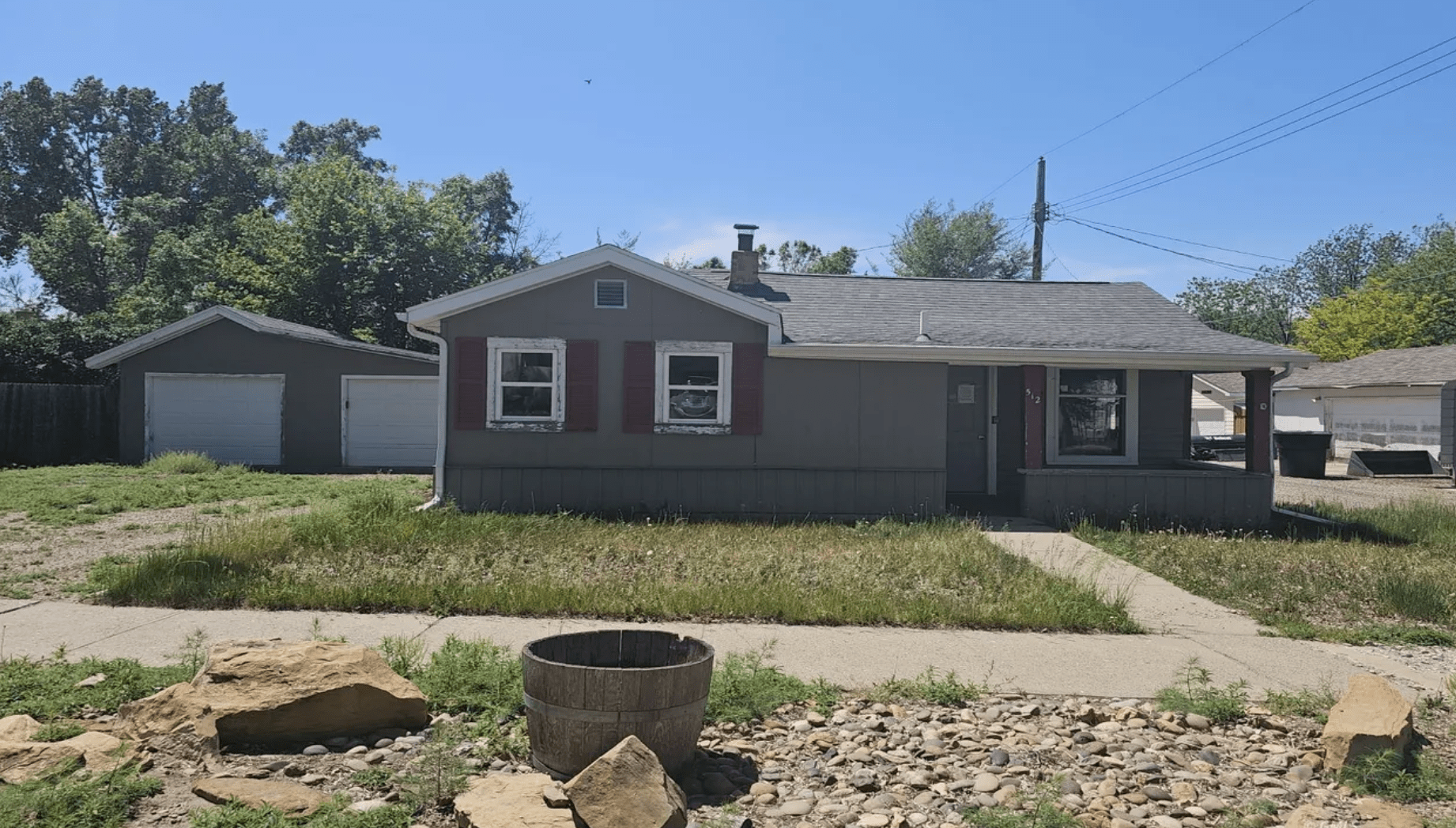
c.1872 Illinois Fixer Upper Real Estate Auction Starting Bid $5K
OHU50K Notes $5,000 Sold For $11,000
This historic Illinois fixer upper was once a multi-family home but was in the process of being converted to a single-family residence and is ready to be finished to fit your unique style! It has wonderful curb appeal, four bedrooms, 2.5 baths.

Realtor Comments
Price listed is Starting Bid Only. Bidding starts closing 7/11/2024 @ 3 p.m. Attention all investors and rehabbers! Potential filled 4BR/3BA home with a full basement in Belleville, IL!
Main Level
The main level features a living room, a dining room, a kitchen, a bonus room and half bath.
Second Level
The second level houses all four bedrooms and two full baths. Situated on a spacious 0.17+/- acre lot and within walking distance to downtown Belleville, IL!
Property will sell under auction terms and be sold AS- IS, WHERE-IS. Seller, will not make any repairs as a result of any building, occupancy, or environmental inspections. Buyer will be required to sign an Auction Purchase & Sale Agreement if final bid is accepted by Sellers. Showings available on open house date only. Any showings after open house are by appointment only.
- 4bed
- 2.5bath
- Circa 1872

314 N Charles St, Belleville, IL 62220 $5,000 Opening bid Sold For $11,000
If interested in a property, please contact the realtor whose link is provided in the post below, or contact an agent of your own choosing. Independent verification of details and status is recommended.

Family History
From about 1905 to the 1950s, this was the home of the Dammrich family. Eugene Dammrich (1879-1939) was in the grocery business. He married his wife Anna Fruth (1880-1934) in 1904. The couple raised their children, Kermit, Mildred and Eugene, in this home.
Biography from Historical Encyclopedia of Illinois & History of St. Clair Co., published
1907“Eugene A. Dammrich, one of the youngest as well as one of the most promising grocers of Belleville, was born in St. Clair County, Ill., October 10, 1879, a son of Michael and Elizabeth (Doser) Dammrich, and grandson of Jacob Dammrich. Mr. Dammrich’s parents were born in St. Clair County, where his grandfather had settled shortly after his arrival from Germany at an early day.As one in a large family dependent upon the meager earnings of a small farmer, Eugene A. became a wage-earner at the age of thirteen, finding employment in the grocery store of George Seib, with whom he remained for ten years. December 10, 1902, he engaged in the grocery business with H. L. Heineke, at 409 East Main Street under the firm name of Heinecke & Dammrich.The name of Heinecke & Dammrich indicates the character and tendencies of the owners. One is impressed with the idea of progression, of a desire to please, and above all else of absolute cleanliness. The windows are clean, the displays behind them are calculated to attract the eye and arouse the appetite, and the shelf-goods are neatly and systematically arranged. There is a breeziness about their clerks, and an air of cheerfulness, such as are recognized as great aids in the business world of today.”
1907“Eugene A. Dammrich, one of the youngest as well as one of the most promising grocers of Belleville, was born in St. Clair County, Ill., October 10, 1879, a son of Michael and Elizabeth (Doser) Dammrich, and grandson of Jacob Dammrich. Mr. Dammrich’s parents were born in St. Clair County, where his grandfather had settled shortly after his arrival from Germany at an early day.As one in a large family dependent upon the meager earnings of a small farmer, Eugene A. became a wage-earner at the age of thirteen, finding employment in the grocery store of George Seib, with whom he remained for ten years. December 10, 1902, he engaged in the grocery business with H. L. Heineke, at 409 East Main Street under the firm name of Heinecke & Dammrich.The name of Heinecke & Dammrich indicates the character and tendencies of the owners. One is impressed with the idea of progression, of a desire to please, and above all else of absolute cleanliness. The windows are clean, the displays behind them are calculated to attract the eye and arouse the appetite, and the shelf-goods are neatly and systematically arranged. There is a breeziness about their clerks, and an air of cheerfulness, such as are recognized as great aids in the business world of today.”
After the death of Eugene in 1939, Kermit (1912-1987) took over the grocery business and continued to live in the home with his family, wife Lenore, and children, Catherine, James, John, Joseph, Thomas, Kathleen, Deborah, Jerry and Mary, until sometime before 1960. After the grocery store failed, Kermit owned and operated the Loisel Cleaners dry cleaners store in East Saint Louis.

Sat, Jun 15, 1940 ·Page 5

*

History of German Immigrants in Belleville
Belleville, Illinois, has a rich history of German immigration that significantly shaped the city’s culture, economy, and demographics. Here are key points about the history of Germans in Belleville:
Early Immigration
- 19th Century Influx: The significant wave of German immigrants to Belleville began in the mid-19th century. Many Germans arrived in the 1830s and 1840s, fleeing political unrest, economic hardship, and social changes in their homeland.
- Reasons for Settlement: Belleville’s fertile land and growing economic opportunities, particularly in agriculture and coal mining, attracted German immigrants. The city became a hub for those seeking a better life in the United States.
Cultural Impact
- Language and Newspapers: German immigrants maintained their language and cultural practices. German-language newspapers, such as the “Belleviller Zeitung,” were established, serving as a crucial medium for the community.
- Religion: Many German immigrants were Lutheran or Catholic, leading to the establishment of several German-speaking churches in Belleville, including St. Paul’s United Church of Christ and Zion Lutheran Church.
- Education: German immigrants emphasized education, and German-language schools were established. Public schools in Belleville also incorporated German-language instruction for many years.
Economic Contributions
- Agriculture: Germans contributed to the agricultural development of the region, bringing with them advanced farming techniques and a strong work ethic.
- Brewing Industry: Germans brought their brewing traditions to Belleville, leading to the establishment of several breweries that became an essential part of the local economy.
- Skilled Trades: Many German immigrants were skilled craftsmen, contributing to various trades such as blacksmithing, carpentry, and tailoring, which supported the growth and infrastructure of Belleville.
Social and Political Influence
- Social Organizations: Germans in Belleville formed numerous social clubs, singing societies (Liederkranz), and mutual aid societies, which provided a sense of community and support for new immigrants.
- Political Involvement: German immigrants were active in local politics, advocating for progressive reforms and playing significant roles in the governance of Belleville. The city’s first German-born mayor, Gustav Koerner, served from 1838 to 1840 and later became the Lieutenant Governor of Illinois.
Legacy
- Cultural Preservation: The German influence remains evident in Belleville’s cultural events, such as the annual Oktoberfest celebration, which honors the city’s German heritage.
- Architectural Influence: Many historic buildings in Belleville reflect German architectural styles, including homes, churches, and public buildings.
- Population: Today, descendants of German immigrants continue to be a significant part of Belleville’s population, contributing to the city’s diverse cultural fabric.
The history of Germans in Belleville, Illinois, is a testament to the lasting impact of immigration on shaping communities in the United States. The contributions of German immigrants have left an indelible mark on the city’s culture, economy, and society.

*

*

*

*

*

*

*

*

*

*

*

*

*

*

*

*
 *
*