
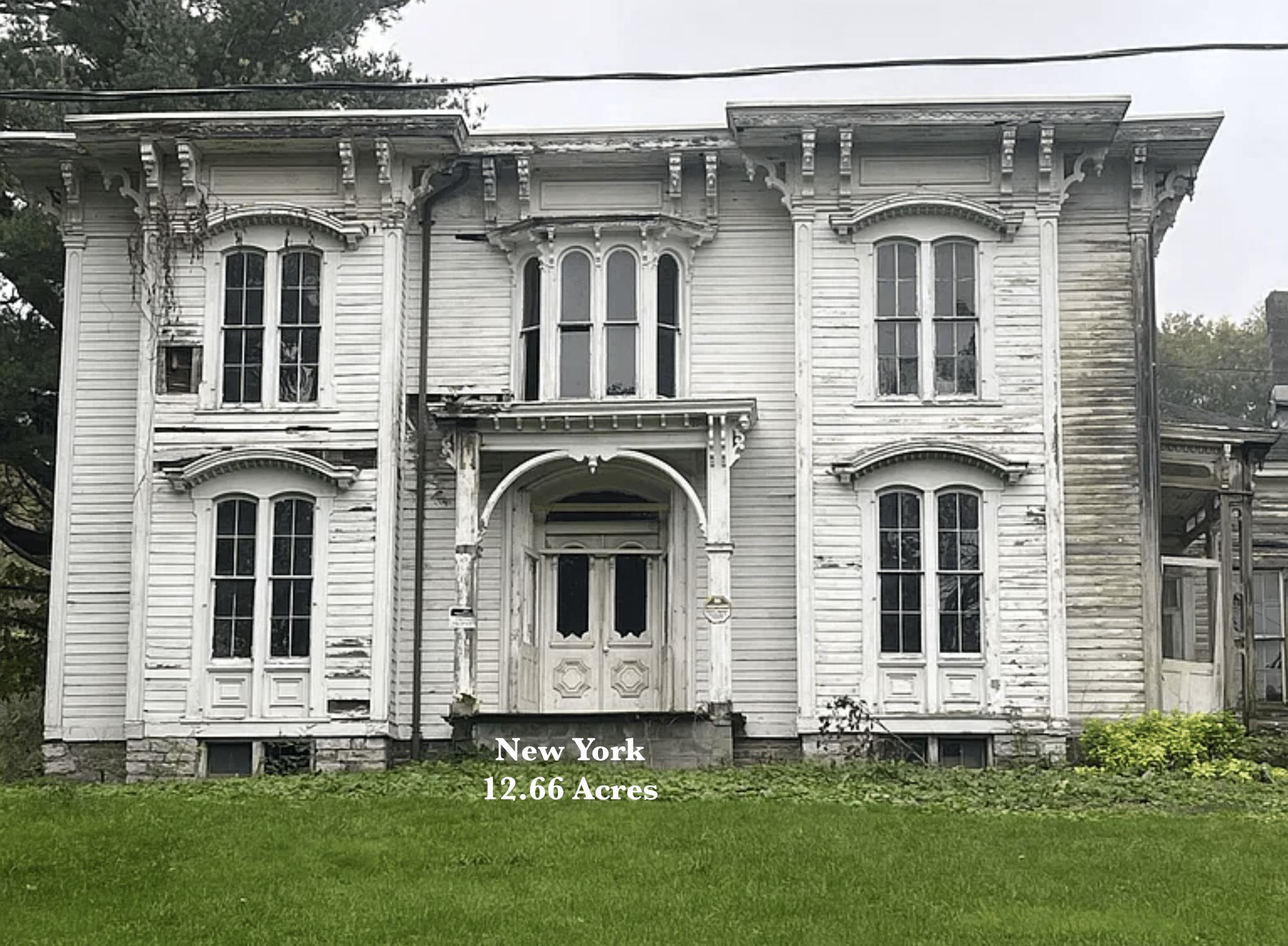
Save This c.1856 New York Italianate 0n 12.6 Acres – Old Hop Farm
$175,000
Realtor Comments
An adjoining 6.5 acre lot with a nice ranch home for sale for $200k, full basement, move in ready. It’s located on a very pretty quiet and cute road with waterfalls, beautiful views and a vineyard. High Georgia pine ceilings and the window trim is beautiful spanning from the floor to the ceiling. The foundation is solid as a rock and 5’ thick! The views are absolutely amazing! The house has great bones and hope to find someone bring it back to life, with the exception of the small utility room addition that has a bad roof. The house outer boards are warn on the side that gets the most sun, but the other 3 sides are fine. Great hunting land or just a spot to enjoy, you can see 100 miles or … on a clear day. Views views views, and close to Cooperstown! Very very cheap taxes
- 7bd
- 1ba
- 2,828sqft
- 12.66 acres
- Circa 1856
433 Salt Springville Rd, Cherry Valley, NY 13320 $175,000
If interested in a property, pleases contact the realtor whose link is provided in the post below, or contact an agent of your own choosing. Independent verification of details and status is recommended.
-Contact Property Owner:(607) 349-3994
Pros of Living in Cherry Valley
Rich History & Small-Village Charm: Founded in the 18th century, Cherry Valley is steeped in Revolutionary War history and features a charming historic district, beautiful antique homes, local artisan shops, and a strong sense of heritage.
Scenic Rural Beauty: Surrounded by rolling hills, farmlands, and forests, the area provides a peaceful, visually stunning countryside setting with low traffic and quiet neighborhoods.
Proximity to Cultural Hubs: While peaceful and rural, the village is just a short drive from Cooperstown (famous for the Baseball Hall of Fame, Glimmerglass Festival, and Otsego Lake) and the regional small city of Oneonta,offering access to arts, dining, and healthcare.
Outdoor Recreation: The Central New York region offers fantastic year-round outdoor activities, including hiking,fishing in local streams and lakes, fall foliage viewing, cross-country skiing, and exploring nearby state forests.
Cons of Living in Cherry Valley
Long, Cold Winters: Upstate New York winters bring heavy snowfall, freezing temperatures, and prolonged overcast days, requiring significant winter home and vehicle maintenance.
Limited Local Economy & Jobs: Employment opportunities directly within the village are narrow, typically centering on local government, education, small businesses, and agriculture, often requiring a commute to surrounding towns for diverse careers.
Geographic Isolation & Limited Amenities: Daily conveniences, large grocery stores, and major shopping require driving to nearby towns. Furthermore, the village is a considerable drive from major metropolitan areas like Albany, Syracuse, or New York City.
Sparse Dining and Nightlife: While there are a few local cafes, pubs, and seasonal spots, dining, nightlife, and entertainment options within the immediate village are minimal.
*
*
History
- Rise of the Industry. Commercial hop cultivation spread into Otsego County in the early 1800s after pioneers introduced the crop to neighboring Madison County. The opening of the Erie Canal in 1825 connected local farms to major markets and fueled rapid expansion.
- Regional Dominance. By the mid-1850s through the 1880s, New York State produced the vast majority of the nation’s hops, peaking at over 21 million pounds annually. Cherry Valley served as a prominent regional hub for both hops and dairy farming.
- Farm Infrastructure. Local farms across the Cherry Valley countryside built specialized hop houses (kilns) with tall, ventilated roofs to dry, cure, and bale the harvested hop cones before shipping them to brewers. Several vintage hop houses still survive in the area as architectural remnants of this era.
- Blight and Competition. In the late 19th and early 20th centuries, fungal diseases like blue mold and downy mildew, along with aphid infestations, devastated Central New York hop yards. At the same time, growers in the Pacific Northwest—where drier summer climates prevented blight—began overtaking New York’s market share.
- Prohibition. The passage of Prohibition (1920–1933) eliminated domestic commercial brewing demand, prompting most remaining Cherry Valley hop farmers to abandon their fields or convert their land entirely to dairy farming.
*
*
*
*
*
*
*
*
*
*
*
*
*
*
*
*
*
*
*
*
*
*
*
*
*
You May Also Like

Save This Old c.1905 Nebraska Fixer Upper $40K
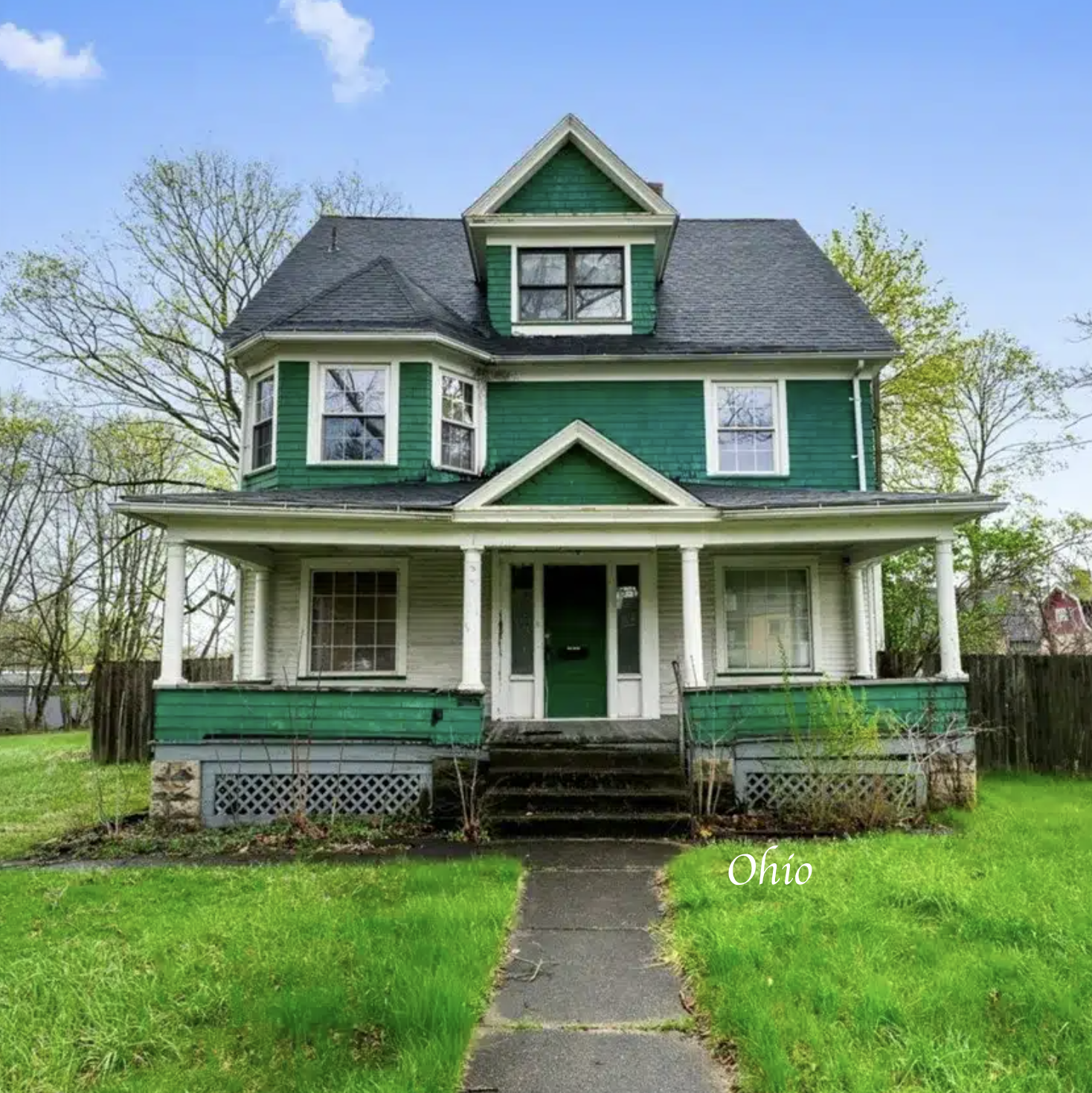
c.1907 Six Bedroom Ohio Home With Original Elements $69K
