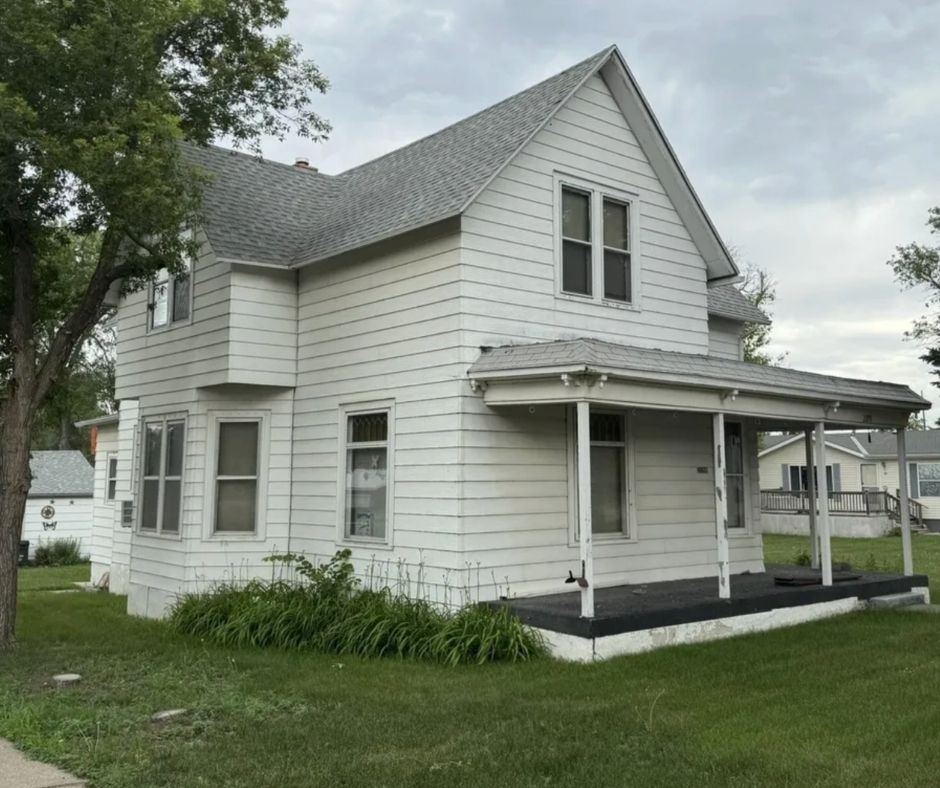
c.1900 South Dakota Starter Home For Sale Reduced to Under $55K
$64,950 Reduced to $54,950

Realtor Comments
With spacious bedrooms, walk-in closets and 13/4 baths, a large living room, and adjacent dining room, the renovation potential is limitless!Located on a large corner lot, with an additional attached lot, privacy fence, cement driveway, shed and two-stall garage. Some water damage occurred in the upstairs bathroom, and into the space below it on the main floor. A full inspection was performed 11/12/25 showing ”the leak came from the exterior…”, which has been fixed and also stated ”these area are dry and there is no evidence of any ongoing issues.”
- bed
- bath
- Circa 1900

2098 3rd Ave, Bowdle, SD 57428
If interested in a property, please contact the realtor whose link is provided in the post below, or contact an agent of your own choosing. Independent verification of details and status is recommended.
Contact Realtor: Shelley Westra-heier

Pros
- Low cost of living: Housing and everyday expenses tend to be quite affordable compared with larger cities.
- Small‑town community: Tight‑knit, friendly residents; strong sense of neighborliness and community events.
- Low crime and safety: Small towns in the region typically have low violent‑crime rates and a calm environment.
- Quiet, slower pace of life: Less traffic, minimal congestion, and a peaceful lifestyle—appealing for families and retirees.
- Access to rural outdoor activities: Hunting, fishing, hiking, and wide open spaces for ATVing, snowmobiling, and nature enjoyment.
- Strong local identity and traditions: Community gatherings, school activities, and local organizations often play central roles.
- Short commutes locally: Minimal travel time within town and easy access to nearby farms and small businesses.
- Good for raising children in a close community: Smaller schools, familiar teachers, and community support networks.
Cons
- Limited job market: Fewer employment opportunities—especially in specialized, high‑paying, or tech fields—so many residents commute or work in agriculture, small business, or local services.
- Fewer amenities and services: Limited shopping, dining, cultural, and entertainment options compared with larger towns and cities.
- Healthcare access: Basic medical services may be available locally, but specialized care often requires travel to larger regional centers.
- Education and extracurricular limits: Small schools may offer fewer advanced course options, extracurriculars, and specialized programs.
- Social and cultural homogeneity: Less diversity and fewer cultural institutions or events than in urban areas.
- Harsh winters and weather extremes: Cold temperatures, snow, and wind can be challenging; winter driving and heating costs are considerations.
- Limited public transport and longer travel times for big‑city needs: Car ownership is typically required, and travel to major airports or large hospitals requires significant driving.
- Younger population outmigration: Young adults often move to larger cities for education and jobs, which can affect long‑term vibrancy.
- Slower pace of services and development: Fewer entertainment options, slower internet speeds in some areas, and limited late‑night services.
- Property resale market: Smaller, slower real estate market—selling a home may take longer than in higher‑demand areas.