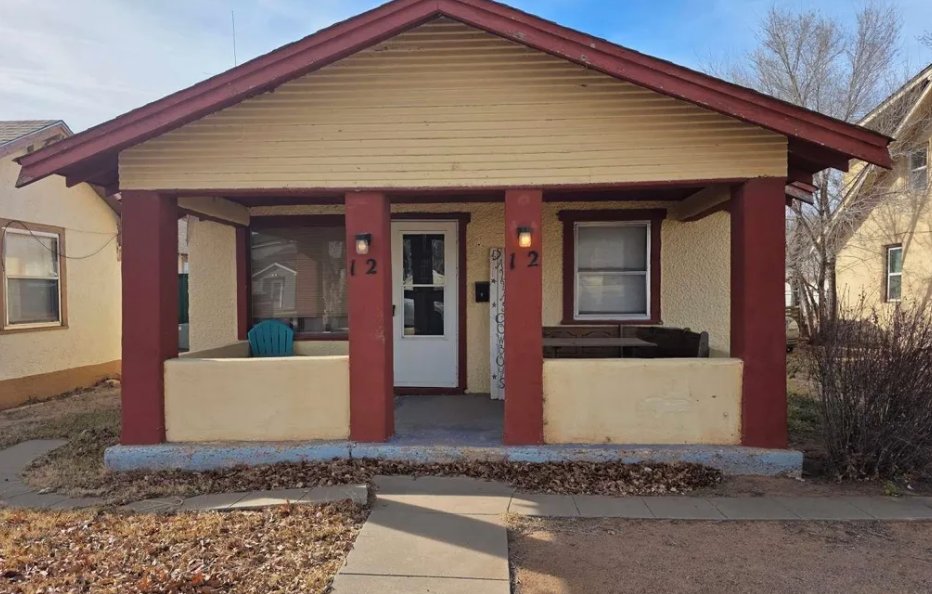
c.1925 West Virginia Handyman Special Reduced to $59K
$65,000 Reduced to $59,000
Take a look at the Google Map street view, and you will see a whole line of homes that resemble our featured West Virginia handyman special.
That is because these small, two-bedroom, one-bath homes were built for railroad workers in the early 20th century when the town was an important railroad hub. Our featured home has a fenced yard, hardwood floors, corner cupboard, vintage kitchen cupboards, carport, shed, outbuilding and pergola. Let’s not overlook central air and heat, and public water and sewer, too.

Realtor Comments
Two bedroom one bath home all on one floor. Fenced in yard. Off street parking for one car. Two out buildings. Close to schools, restaurants, and I-64 access.
- 2bed
- 1bath
- Circa 1925

1712 Beech St, Kenova, WV 25530 $65,000
If interested in a property, please contact the realtor whose link is provided in the post below, or contact an agent of your own choosing. Independent verification of details and status is recommended.
- Contact Realtor: Brandi Wiles DavisBrokered by GREAT AMERICAN REALTY
- Google Map
- Niche


History
Located at the confluence of the Big Sandy and Ohio rivers, the community became a significant railway town due to its location on major rail lines, including those operated by the Chesapeake and Ohio Railway (C&O). As the railroads expanded in the region, there was a need for housing for the workers who built and maintained the railroad, as well as for the train crews, maintenance staff, and other railroad-related employees.
In fact, many small towns and cities that grew up around major railroad depots or junctions during this period often had company-owned housing for railroad workers. These homes were typically modest, often row houses or small cottages, and were sometimes rented to employees by the railroad companies. In Kenova, some of these homes are still standing today, though many have been modified or replaced over time.
The history of Kenova is closely tied to the development of the railroad, which was a major economic force in the area. The town’s population and infrastructure grew rapidly as the railroads brought economic opportunities, and much of the early architecture reflects the influence of the railroad industry, including worker housing.