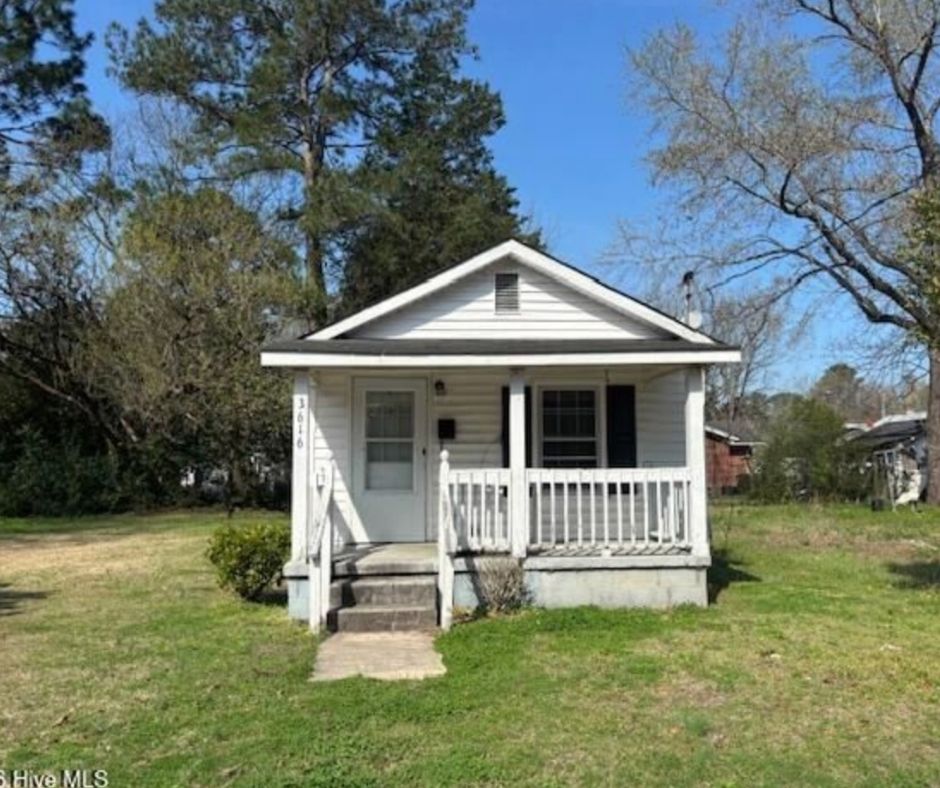
c.1950 North Carolina Shotgun Style Home For Sale $59K
$59,000

Realtor Comments
Calling all INVESTORS! Selling AS-IS. Rare opportunity to own another investment rental home on same street which is listed at 3645 Williams St. Seller motivated to sell both as a package deal so bring all offers. Seller is a Broker.
- 1bd
- 2ba
- 640sqft
- 4,365sqft lot
- Circa 1950
More North Carolina Properties

3616 Williams St, Farmville, NC 27828
If interested in a property, please contact the realtor whose link is provided in the post below, or contact an agent of your own choosing. Independent verification of details and status is recommended.
Contact Realtor: Peggy Bryan 252-320-3832,
Century 21 The Realty Group

Pros
- Small-town community: Friendly, close-knit atmosphere where neighbors know one another and local events foster community ties.
- Affordable cost of living: Housing and everyday expenses are generally lower than in larger cities.
- Convenient location: Positioned between Greenville and Raleigh/Greensboro corridors, making regional commuting or weekend trips manageable.
- Educational resources: Home to institutions like Halifax Community College and nearby East Carolina University and others within driving distance; solid local public schools.
- Outdoor and recreational options: Parks, Greenway trails, Lake Mattamuskeet (regionally), and nearby waterways support fishing, walking, and outdoor activities.
- Low traffic and slower pace: Easier daily driving and less congestion than urban centers—appealing for retirees and families seeking a quieter life.
- Local amenities and events: Local restaurants, shops, fairs, and community events contribute to a lively small-town culture.
Cons
- Limited job market: Employment opportunities—especially in specialized professional fields—are more limited; many residents commute or work in regional hubs.
- Fewer entertainment and cultural options: Limited nightlife, major performing arts venues, and large-scale cultural institutions compared with bigger cities.
- Healthcare access: Basic medical services are available locally, but specialized care or large medical centers require travel to larger nearby cities.
- Limited public transportation: Reliance on a personal vehicle is typical; public transit options are minimal.
- Slower pace of services and shopping: Less variety in retail, dining, and specialty services—may require driving to larger towns for more options.
- Potential for slower economic growth: Small towns sometimes experience slower development and fewer new-business incentives, which can impact long-term opportunities.

*

*

*

*

*

*

*

*

*

*

*

*

*

*

*

*