
HAUNTED HOUSES
A Vanished Gilded Age Mansion – The Saga of Pepperidge Hall
This is a sad tale of opulence, suicide and hauntings, I thought I’d share my experience with Pepperidge Hall. I grew up in the neighborhood known as Idle Hour in Oakdale, New York. It was called that as the homes were built on the grounds of William K. Vanderbilt’s “Idle Hour” estate. Living in this neighborhood was magical. Just down Montauk Highway, across the street from my parent’s dry cleaning business in Oakdale, there also stood LaSalle Academy, the former Bourne (Singer Sewing Machine heir) estate. My sister had her wedding photos taken there. My experiences with these two wonderful estates, however, are another story. This is about Pepperidge Hall. As a kid in Idle Hour, there were so many amazing places to discover – the Connetquot River, the small canals Vanderbilt had built throughout his estate, the quaint bridges that dotted the area, the Artist Colony, the Clock Tower, the Carriage House, the giant decorative vases that popped up along Shore Drive…. Pepperidge Hall But what my friend Lydia and I found during a bike ride down a wooded path one summer is what has intrigued me for decades. The little-traveled path started at the end of Lincoln Drive and went all the way down to the Great South Bay. It was a great place for a picnic and beach glass collecting, a past-time both Lydia and I were into during high school. On one beach glass excursion, we happened to see to the left of the path what looked like the outline of a circular driveway. Sure enough, there in the middle of the brush was a drive, the remains of a cement pond, crumbling brick walls and a few broken pieces of colorful clay tiles. We could tell by the footprint of the drive and foundation walls that this had once been a grand estate. We returned to visit it often, but no one could tell us anything about our discovery. Forty-five years later, I finally connected the dots and realized it was the remains of Pepperidge Hall. An eccentric sugar magnate, millionaire and descendent of William the Conqueror, Christopher Robert II, built the spectacular Jacobean style mansion in 1888 in a race with Vanderbilt and Bourne to see who could build the biggest and best mansion. Following the death of his first wife, Robert travelled Europe amassing a fine collection of furniture and art. After marriage to his second wife, a well-to-do woman with whom he had a rocky relationship, Robert purchased 1,000 acres on the Great South Bay. The 1,000-acre estate bordered Vanderbilt’s to the east, but, although the two men socialized together, it appeared to be more of a competitive rivalry at times, even resulting in an argument over hunting dogs. In 1882, Robert commissioned Edward Ficken to build his Queen Anne lodge. After it burned down seven years later, Fickens designed and built the massive, rectangular Pepperidge Hall. A large inner courtyard with a 30′ by 50′ pool and fountain dominated the plan, and a 109-foot glass conversancy stood on the west side of the rectangle. Stepped gables, turrets, bay windows, numerous chimneys, stables, a dairy and carriage house were showcased. Suspicious Suicide Unfortunately, Robert didn’t live there long before he made the questionable trade of his opulent Long Island estate for a Wall Street complex in 1896. Then in 1898, Robert was found shot to death. The circumstances were suspicious at best, but the coroner deemed it a suicide. Hauntings Over the years, the mansion went through a number of owners attempting to develop it into a hotel or retreat, even a silkworm farm but with no success. Several silent films utilized the mansion as a backdrop, including Lady Slippers, To Hell With the Kaiser, and Dead Men Tell No Tales, and later a group of metaphysicians purchased the property. Tales of the ghost of a moody Christopher Robert roaming the halls began to circulate. Eventually, however, the costly furnishings were sold off and the property subdivided. The estate, which had cost Robert $1,500,000, was now worth only $20,000. Nature had taken over. Walls had cracked. Mold and vines had invaded the 18 bedrooms as Robert still roamed the halls lamenting his failure. Neglected and vandalized, Pepperidge Hall, once considered one of the three most opulent estates on the South Shore’s Gold Coast, was razed in 1940. What I realize now, is that the narrow, winding road (only wide enough for one car) that we nicknamed “The English Road,” was actually part of the estate. Homestead Road houses several of Pepperidge Hall’s support buildings. The carriage house and stables were turned into homes decades ago. I remember the ice house and dairy, too. My British mother, sisters, and I often walked this lovely stretch of road as we made our way from Vanderbilt Boulevard to Byron State Park. It took me quite a while to put two and two together, but I am so fortunate to have grown up in this neck of the woods. I’m saddened by the loss of such historic buildings, especially now that the Idle Hour mansion is under threat of demolition, but no matter what, these magical places, these cherished memories will remain with me forever.
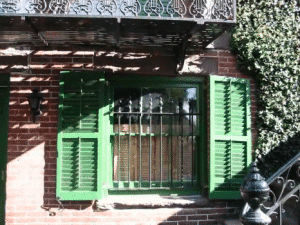
The Savannah Georgia Haunted House of Poet Conrad Aiken
The Haunted House of Conrad Aiken Forty-two percent of Americans believe in ghosts, according to a Harris Poll. As this is Halloween month, this story is for them. (Note: This home is not for sale.) Family Background Pulitzer Prize-winning poet Conrad Aiken was born in 1889, the eldest of four children born to wealthy parents Dr. and Mrs. William Ford Aiken. The family lived in this house at 228 East Oglethorpe Avenue in Savannah, Georgia, where sadly the parents constantly argued. Anna Potter Aiken was a socialite who liked to spend money, and the doctor suffered from mental illness. Constantly anxious about being institutionalized by a family member, when asked the simply question, “How are you?” William would answer, “For an answer to the question, I have to refer you to my lawyer.” The Tragic Day In February of 1901, 11-year-old Conrad listened from his room as his parents argued about money, when unexpectedly he heard his father count, “One. Two. Three.” The young boy heard his mother scream as a resounding gunshot went off, and then another. Conrad tiptoed from his bedroom into his parents’ dark room to find their lifeless bodies. His father had killed his mother, then shot himself, both age 36. Conrad immediately ran to the police station for help. In later years, he wrote, “After the desultory early-morning quarrel, came the half-stifled scream, and the sound of his father’s voice counting three, and the two loud pistol shots and he tiptoed into the dark room, where the two bodies lay motionless, and apart, and, finding them dead, found himself possessed of them forever.” Conrad’s Later Life Conrad went on to live a successful yet haunted life. Multiple marriages and mental illness intertwined with his great prominence in the literary scene. He wrote dreamlike, sometimes nightmarish poetry and served as consultant in poetry to the Library of Congress and poet laureate for the state of Georgia. Twelve years before his death in 1973, the poet was offered the opportunity to live in his parents’ old house at 228 East Oglethorpe Street free of charge. He chose instead to purchase the house next door at number 230. In his later years, Conrad spent a significant amount of time in Savannah’s Bonaventure Cemetery where his parents are buried. He even had a marble bench built next to their graves which would serve as his own tombstone. Hauntings Another doctor purchased the Aiken home at number 228 after Conrad’s death. He believed it to be haunted, seeing orbs and hearing countless strange noises, so he agreed to a paranormal investigation. An infrared video indicated more than 50 orbs, and a digital voice recording captured a male voice whispering, “Do you want to know what I know?” Investigators were led to the conclusion that the spirits of the Aiken parents are still living in the home as if nothing ever happened, and the home is considered one of the most haunted houses in Savannah, Georgia, The house was on the market four years ago for $1.5 million. It is not currently for sale. Related: The Haunted House of Prospect Place Ohio Related: A Haunted House Tale ~ The Curse of the Lemp Mansion
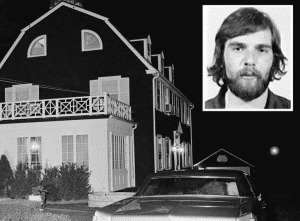
The Amityville Horror House – Haunted or Hoax?
The Amityville Horror House is part of our Haunted House House series for Halloween month. This house is NOT currently for sale and certainly never cost under $50K. Ronald DeFeo Sr. purchased the beautiful Dutch Colonial on the canal for $75,000 when the address was 122 Ocean Avenue. I have driven past the house numerous times when it featured the infamous eyebrow windows on the gable end, but those have been altered, as has the current address to 108 Ocean Avenue. The last recorded sale was $850,000. Loose Personal Connection By now, everyone knows the story that shocked the country when in 1974 a drug-addicted Ronald DeFeo Jr. murdered his mother and father and four siblings while they slept. What you may not know, is that my married last name is DeFeo. At the time of the murders, my future husband was a 19-year-old with dark hair and beard like Ronnie’s, who lived two canals over and five minutes away from 108 Ocean Avenue with his parents and five siblings. Although both DeFeo families attended the same church, the familial relationship was very distant, and they did not really know each other. Still, the story was splashed all over Newsday ,and everyone who lived on Long Island recognized the DeFeo name. My husband worked for Macy’s department store at the time in Massapequa. Upon arrival at work several days after the killings, his boss, Mr. Rubio, asked him what he was doing there. “Wasn’t that your family that was killed?” This question was asked countless times by countless people. Even years later, when I applied for a library card with my new married name, I was asked if I was related to Ronald DeFeo. Haunted or Hoax? Despite Ronnie (aka Butch) DeFeo’s claim that he had heard voices suggesting that his family was plotting against him and to murder them out of self-defense, his insanity plea wasn’t accepted. In 1975, he was found guilty on six counts of murder and sentenced to six separate 25-years-to-life sentences. (He was married three times and died in prison in March 2021 at the age of 69). Because of Ronnie’s claims, however, stories that the Amityville house was haunted began to circulate, including that it could control its inhabitants. When George and Kathy Lutz and their three children purchased the house, they left after only residing there for under one month, citing the dramatic paranormal activity that we have all been subjected to in the The Amityville Horror films. It has been reported that it was George Lutz’s plan all along to make money from the home. He apparently stretched his finances to purchase the home, and gave it back to the bank after he could not find another buyer. Lutz and Kathy were both known as enthusiasts of the occult, and were paid $300,000 for rights to their story. A year after moving from 108 Ocean Avenue, George and Kathy split up. Several families have since owned the gorgeous house on the canal, and what is telling, is that none have reported any paranormal activity whatsoever, not even windows rattling or creaky floorboards. Google Map blocks out the house, but today 108 Ocean Avenue is simply a beautiful house in a beautiful neighborhood where almost 50 years ago a terrible and tragic event occurred. Haunted or hoax? As a DeFeo, I say it was all hogwash.
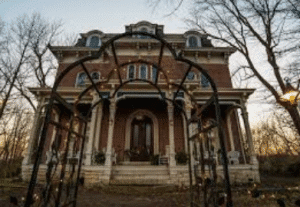
McPike Mansion of Alton IL Haunted House Story
In celebration of Halloween month, we offer a haunted house story. (Note: This house is NOT for sale). After Old Houses Under $50K featured a couple of cheap old homes for sale in Alton, Illinois, readers let me know than the community is considered to be one of the “most haunted small towns in America.” Alton has no shortage of ghostly tales, but perhaps the most infamous haunted house is the McPike Mansion. Whether you call it an Italianate or Second Empire, the notorious home is nestled amongst gnarled oak trees, towering over Alton from atop Mt. Lookout, the highest point in town. The Mansion Built in 1869, the McPike Mansion was designed by architect Lucas Pfeiffenberger for Henry Guest McPike and his family as their 15-acre country property. The red brick mansion was one of the largest and most extravagant and regal private dwellings in Alton at this time. It featured 16 rooms, 11 marble fireplace, intricately carved staircase, beautifully carved trim bordering the ceilings, and vaulted wine cellar. all of which have been stolen during its abandonment. Intricate carved trim still border the ceiling in one of the front rooms. McPike Family Henry Guest McPike (1825-1910) was the first owner. He was a local businessman, horticulturist, secretary, treasurer and mayor of Alton. At the age of 60, McPike married the 32-years younger Eleanor Jane “Nellie” Moreland (1838-1934). This was his third marriage. His first wife died and the second marriage ended in divorce. Henry and Nellie lived in this, their country home, with their daughter Moreland (1887-1984). McPike had six grown children by his other wives, but they appear to have lived elsewhere. After Henry’s death in 1910 at his home, the McPike family continued to reside in the mansion until 1936 at which time Nellie and Moreland relocated to Denver, Colorado. Per Find A Grave: “Henry was a close friend of Abraham Lincoln and sat on the podium during the Lincoln-Douglas Debate in Alton in 1858. He was also with Lincoln in Springfield, IL, when the telegram arrived informing Lincoln of his election to the presidency. Mr. McPike was a real estate developer, owned a box manufacturing company, served as Mayor of Alton 1887-91 and was a noted horticulturist. The mammoth “McPike” grape was developed on the McPike estate (Mount Lookout) in North Alton. The grape was patented and became famous for the wine produced from it.” Paranormal Activity Begins The mansion was sold to Peter Laichinger, a factory superintendent, and his wife Florence in 1938. (At that time, the home was valued at $4,000). Laichinger’s two adult stepsons lived with them and told of strange events that could not be explained. Although no children lived on the premises, the stepsons reportedly heard the voices and laughter of children. In 1945, Mr. Laichinger died relatively young at the age of 59. His family continued on at the mansion for ten years, but it lay vacant from the 1950s well into the 1990s. Neglect, weather and vandals turned the mansion from majestic to menacing. The rusty iron fencing, peeling paint, broken windows, and graveyard added to the property’s reputation as a place where ghostly spirits dwelled. Rumors of apparitions looming in the windows began to circulate. New Owners In 1994, Sharyn and George Luedke purchased the mansion, undertaking its restoration with the hopes of turning it into a bed and breakfast. It did not take long for the couple to realize, however, that the mansion held secrets. Within six weeks of living in the house, Mrs. Luedke experienced her first ghostly event. As she was planting in the front garden, she looked up to see a strange man staring at her from a window. He quickly vanished, but not before she got a good look at him and his attire. Soon after, while researching the history of the mansion, Mrs. Luedke was shocked to see a photo of the previous owner, Paul Laichinger, wearing the same outfit as the strange man in the window. Other Paranormal Events Light orbs that show up in photos, pacing footsteps, pacing footsteps, vanishing objects and an invisible presence have been reported with several of these experiences captured on film for shows like Scariest Places on Earth’ and Fact or Faked: Paranormal Files. Most of the activity takes place in the wine cellar where a mysterious mist appears that follows people as they walk around the basement. Additionally, a cumbersome metal basement door has been known to move on its own and scrape across the floor. Psychics and mediums have visited the mansion often and suggest that McPike family and other past residents of the estate still roam the halls. Owner Sharyn Luedke is convinced, however, that it is the ghost of not only Paul Laichinger, but also of a servant girl, Sarah Wells, that inhabit her home. The fragrance of Sarah’s lilac cologne still lingers in the old attic servant’s quarters.
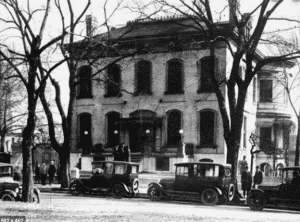
A Haunted House Tale ~ The Curse of the Lemp Mansion
Not for sale. This is the third in our Halloween series of ghostly houses – a haunted house tale that might interest you – The Curse of the Lemp Mansion. As a rags-to-riches story, the Lemp family tale is like none other. Johann Adam Lemp left his home in Germany and emigrated to St. Louis in 1838. Back then the only beers available in the US were strong English ales. So Lemp, along with a Philadelphia partner, introduced the lighter German-style beer that has become America’s favorite. Lemp discovered that the caverns underneath St. Louis acted as a natural coolant. That allowed him to ramp up production without spoilage, thus leading him to purchase a brewery and the Lemp Mansion over the caverns in which his beer was stored. Although few have heard of it today, Lemp’s Falstaff beer became a success practically overnight, and was the most popular beer well into the 20th century, leading over second fiddle Anheuser/Busch’s Budweiser. But tragedy soon struck. Johann died in 1862, leaving the business to his son William. In 1901, William’s son Frederick, who was to inherit the brewery, died suddenly from heart failure. When William’s best friend, Frederick Pabst, of Pabst Blue Ribbon fame, died in 1904, William became distraught. He shot himself in the head in the family mansion. The mansion and business was then left to William’s son Billy. He sadly ran it into the ground, shuttering it abruptly in 1919. Soon after, he and his sister Elsa both committed suicide. Thirty years later, another of William’s eight children, Charles, shot his dog to death and then himself. He left a note simply saying, “In case I am found dead, blame it on no one but me.” But rumors were sparked that the blame actually rested on the Lemp Mansion – that the house was haunted and possessed a curse under which Lemp family members suffered tragic deaths. Each room in the mansion has a ghostly tale. On occasion, small objects will move around Charles’ bedroom without cause. A stain that looks like his dog’s blood exists on the floor. Another bedroom sometimes emanates a raw sewage smell, indicating that a spirit dislikes you. A small child roams the hallway, a shadowy man lurks in the basement and a vanishing spirit has been seen eating a meal in the dining room. The story of the aforementioned Elsa Lemp should be told here. Elsa was the youngest of William’s eight children and became the wealthiest woman in St. Louis in adulthood. She had a troubled marriage, however, and after their only daughter died in childbirth, she filed for divorce and cutting her husband Thomas out of her will entirely. A year later they remarried, but just 12 days after, Elsa killed herself with a single gunshot to the heart. While Elsa suffered the same family curse as her father and brothers, she died in her own home so her ghost does not reside at Lemp Mansion. The ghosts that haunt her childhood bedroom at Lemp Mansion are the spirits of terminally ill children. In the twentieth century, the mansion was utilized as overflow for a pediatric hospital, and the mischievous kids have been known to pull the sheets out from under sleeping guests. Whether you believe in haunted houses or not,The Curse of the Lemp Mansion is certainly a tragic tale.
The Heinous Crime & Haunted House Story of Frank Lloyd Wright
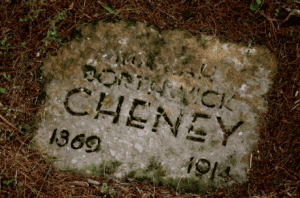
Taliesin/Tan-Y-Der Spring Green, Wisconsin When it comes time to explain why some homes are priced below $50,000, OHU50K often sees comments like, “Look at those orbs in the photos,” or “It must be haunted.” Whether one believes in ghosts or not, most everyone loves a good haunted house story. In celebration of Halloween, this month we are featuring some of the most famous haunted houses stories in the country. Let’s make it clear. These homes are NOT for sale. Taliesin When you think of Frank Lloyd Wright, you naturally think of great architecture. You don’t associate him with a heinous crime and a haunted house. But a scandalous affair and a grisly massacre is just what this haunted house story is about. The Affair In 1903, Frank Lloyd Wright’s wife, Catherine, introduced Martha “Mamah” Borthwick Cheney and her husband Edwin Cheney to Wright when the Cheney couple decided to commission a new house. No good deed goes unpunished, however, because soon after, Wright and Mamah started an affair. Cheney divorced his wife and received custody of their two children. Catherine refused to agree to a divorce, but that didn’t stop Frank and Mamah. Wright abandoned his wife and six children, and in 1911, he began construction of Taliesin where the couple moved in together, a highly immoral act in those days. The Fire On August 15, 1914, while Wright was in Chicago on business, Mamah, her two children, eight-year-old Martha and five-year-old John, along with a group of Wright’s draftsmen and laborers, were being served lunch in the dining room by Barbados native, Julian Carlton. Earlier in the day, he had been reprimanded by Mamah. As related by 19-year-old draftsman Herbert Fritz and his table mates, “We heard a swish as though water was thrown through the screen door. Then we saw some fluid coming under the door. It looked like dishwater. It spread out all over the floor.” Carlton had poured gasoline though the locked doors, and the dining room was engulfed in flames. According to the August 16, 1914 edition of The Detroit Tribune, Mamah, in an attempt to escape the flames, was the first to put her head out an open window. Carlton, waiting outside, wielded a hatchet to cut her neck and crush her skull. He then systematically did the same for each person attempting egress from the burning house. Seven people were massacred, including Mamah, her two children, two workers and a 13-year-old boy. Two survived but were badly injured. The Aftermath Carlton was found hours later after the attack inside the basement furnace of the house. He had swallowed muriatic acid and was barely conscious. He never suggested a motive for the massacre and died from self-inflicted starvation eight weeks later. Talisin Part 2 Taliesin was destroyed, but Wright rebuilt it in Mamah’s honor. Apparently, the Gods did not look fondly on the new incarnation of Taliesin either, as the home was struck by lightning in 1925 and was burnt to the ground a second time. Third rebuild was the charm. The Hauntings Right after the murders, the bodies were taken to a cottage on the grounds called Tan-Y-Deri. It is here where the ghost of Mamah purportedly resides. Usually dressed in a flowing white gown, she is a peaceful presence but appears restless and lost. Doors, windows and lights have been known to open and close by themselves. Groundskeepers who lock the cottage up for the night, have reported finding doors and windows wide open the next morning. Tan-Y-Deri Mamah’s gravestone