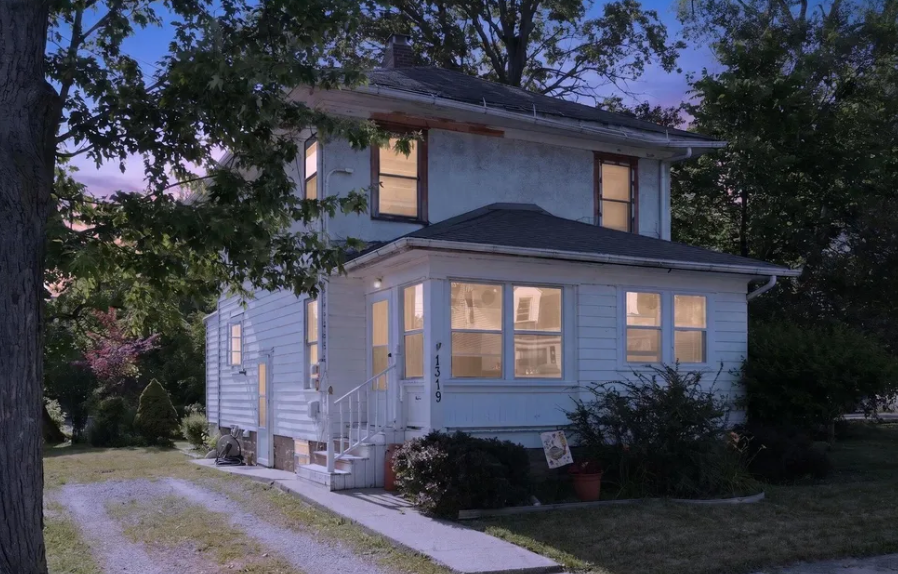
Save This Old Pennsylvania Fixer Upper Schoolhouse For Sale on 0.92 Acre $50K
OHU50K Notes $50,000
As it stands now, this old schoolhouse for sale on 0.92 is rather an eyesore in the heart of a small town in central Pennsylvania. Except for wainscoting, transoms, and vintage schoolhouse lighting fixtures, not much is left of the old school. What uses can you foresee for this building?

Welcome to 25 Spruce Street in Smithmill, PA! This early 1900s schoolhouse presents endless possibilities for your real estate portfolio. With 7, 000 +\- square feet of space, it’s primed for designing multiple 1-2 bedroom apartments. Gutted to the studs in most areas, it’s ready for your vision. The nearly one-acre lot offers ample space for storage units, additional rental units, and plenty of parking. Don’t miss this unique investment opportunityschedule your showing today! Sellers are actively cleaning out the building.
- Studio
- 7,000sqft
- 0.92acre lot
- Circa 1900

25 Spruce St, Smithmill, PA 16680 $50,000
If interested in a property, please contact the realtor whose link is provided in the post below, or contact an agent of your own choosing. Independent verification of details and status is recommended.

Location of This Schoolhouse For Sale
Smithmill, Pennsylvania, is a small unincorporated community located in Gulich Township, Clearfield County.
It was originally called Janesville, named after Jane Nevling, who afterward became the wife of Dr. Caldwell, of Glen Hope. When the post-office was established, it was given the name of Smith’s Mills, then combined to Smithmill. Its history is intertwined with the broader development of the region, particularly in relation to the coal mining industry. Here are some key points about the history of Smithmill, PA:
Early Settlement and Development
- 19th Century: Smithmill was established in the 19th century, during a period of significant growth and development in Pennsylvania due to the burgeoning coal mining industry. The area attracted settlers seeking employment and opportunities in mining and related industries.
- Naming: The community was named Smithmill, likely after a mill owned by a family or individual named Smith, which would have been a central feature in the early economic activity of the area.
Industrial Growth
- Coal Mining: Like many towns in Clearfield County, Smithmill’s development was closely tied to the coal mining industry. The discovery of coal in the region led to an influx of workers and the establishment of mining operations.
- Railroads: The expansion of railroad networks facilitated the transport of coal and other goods, boosting the local economy and enabling Smithmill to thrive as a mining community.
Community Life
- Population: During its peak, Smithmill would have had a population primarily composed of coal miners and their families. The community would have included housing, schools, churches, and businesses catering to the needs of residents.
- Culture and Society: The community likely had a strong sense of camaraderie among its residents, with social and cultural activities centered around the coal mining lifestyle. This included events, church gatherings, and community celebrations.
Decline of Coal Mining
- Mid-20th Century: The decline of the coal mining industry in the mid-20th century had a significant impact on Smithmill, as it did on many other mining communities in Pennsylvania. The reduction in demand for coal, along with the mechanization of mining operations, led to job losses and population decline.
- Economic Challenges: As coal mines closed, many residents moved away in search of employment elsewhere, leading to economic challenges and a reduction in the population.
Present Day
- Rural Community: Today, Smithmill is a small, rural community with a quiet, peaceful atmosphere. It retains its historical charm, with remnants of its coal mining past still visible in the area.
- Local Economy: The local economy is now more diversified, with residents engaged in various occupations, including agriculture, small businesses, and commuting to nearby towns for work.
- Community Spirit: Despite its small size, Smithmill maintains a strong sense of community, with residents taking pride in their heritage and the natural beauty of the surrounding area.
Smithmill’s history reflects the broader story of many small communities in Pennsylvania that experienced growth and decline in tandem with the fortunes of the coal mining industry. Today, it stands as a testament to the resilience of its residents and the enduring legacy of its industrial past.


*You May Also Like
Circa 1949 Georgia Handyman Special $55K
December 21, 2022
c.1920 Super Affordable North Dakota Home For Sale $50K
May 7, 2024