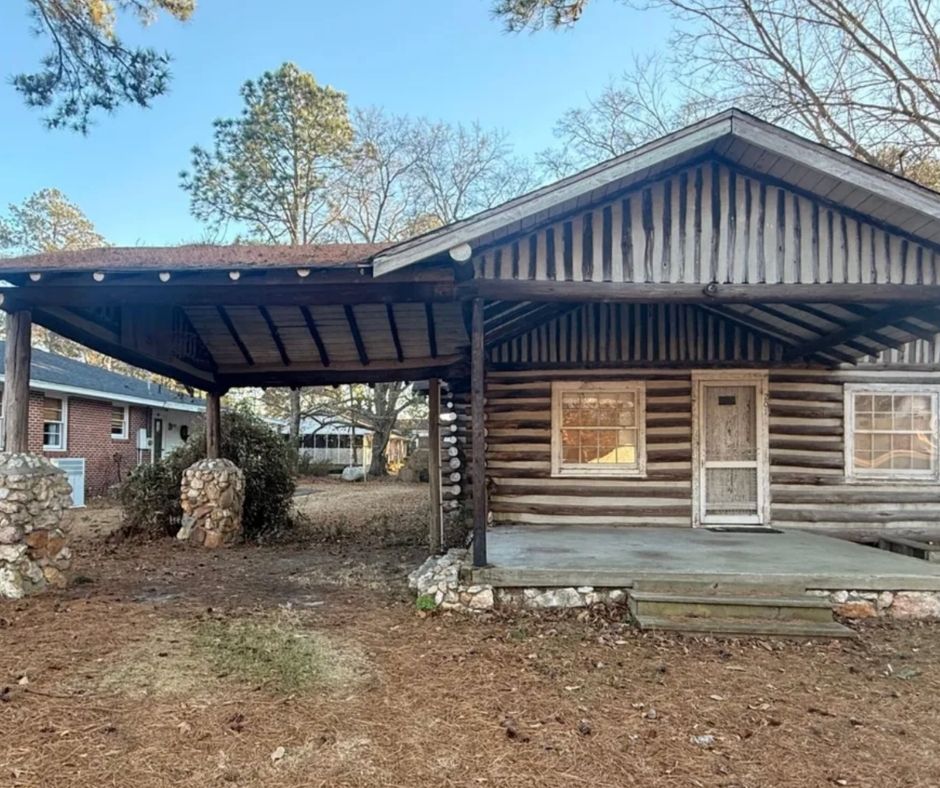
c.1930 North Carolina Log Home For Sale $70K
$70,000

Realtor Comments
Sits on a 0.16-acre lot. Working with Town of Pikeville for the use of this unique property
- bed
- Circa 1930
More North Carolina Properties

201 W Church St, Pikeville, NC 27863
If interested in a property, please contact the realtor whose link is provided in the post below, or contact an agent of your own choosing. Independent verification of details and status is recommended.
Contact Realtor: Dewey P Gamble
Brokered by The New Realty Group Llc

Pros
- Small‑town charm: Tight‑knit community with a friendly, slower pace of life and strong local ties.
- Low cost of living: Housing and everyday expenses are generally more affordable than in larger North Carolina cities.
- Rural and scenic setting: Surrounded by farmland and rolling countryside—good for outdoor activities, gardening, and country living.
- Short commutes & low traffic: Minimal congestion and easy local driving.
- Close to regional centers: Within reasonable driving distance of larger towns (e.g., Goldsboro, Kinston, and Greenville) for more shopping, healthcare, and employment options.
- Low property taxes (often): Rural areas frequently have lower property tax burdens compared with urban centers.
- Community events & local amenities: Small local festivals, churches, and civic organizations help foster community involvement.
Cons
- Limited job market: Fewer local employers and limited career variety—many residents commute to nearby cities or work in agriculture, retail, or trades.
- Sparse amenities & services: Fewer restaurants, shopping, cultural venues, and entertainment options; for broader selections you’ll likely travel to larger towns.
- Healthcare access: Basic medical services may be available nearby, but specialized care and major hospitals may require travel to regional centers.
- Education & extracurricular limits: Local schools may have fewer advanced courses, electives, or extracurriculars than larger districts—check specific school performance if you have children.
- Public transit & connectivity: Little to no public transportation—owning a car is typically necessary. Broadband/internet options can be limited or slower in some rural areas.
- Population trends & limited growth: Small towns sometimes face slow growth or population stagnation, which can affect investment and services over time.
- Weather & seasonal issues: Heat and humidity in summer; occasional severe storms or hurricane remnants can impact the area and require preparedness.
- Limited nightlife & cultural amenities: Fewer museums, theaters, and late‑night options compared with larger cities.

*
*

*

*

*

*

*

*

*

*

*

*

*

*

*

*