c.1880 Georgia Italianate Fixer Upper – One of the “Three Sisters” $59,900
OHU50K Notes $59,900
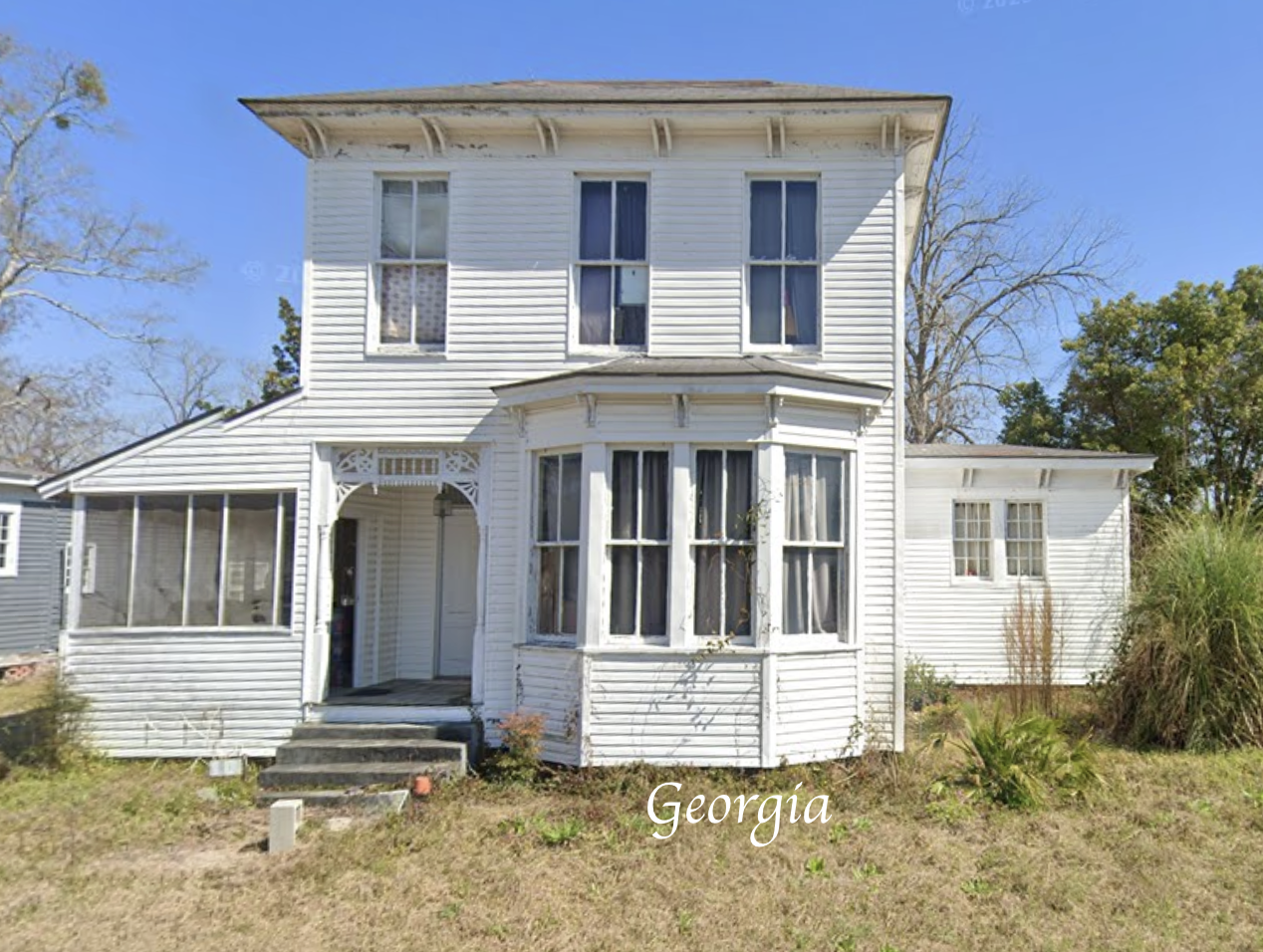
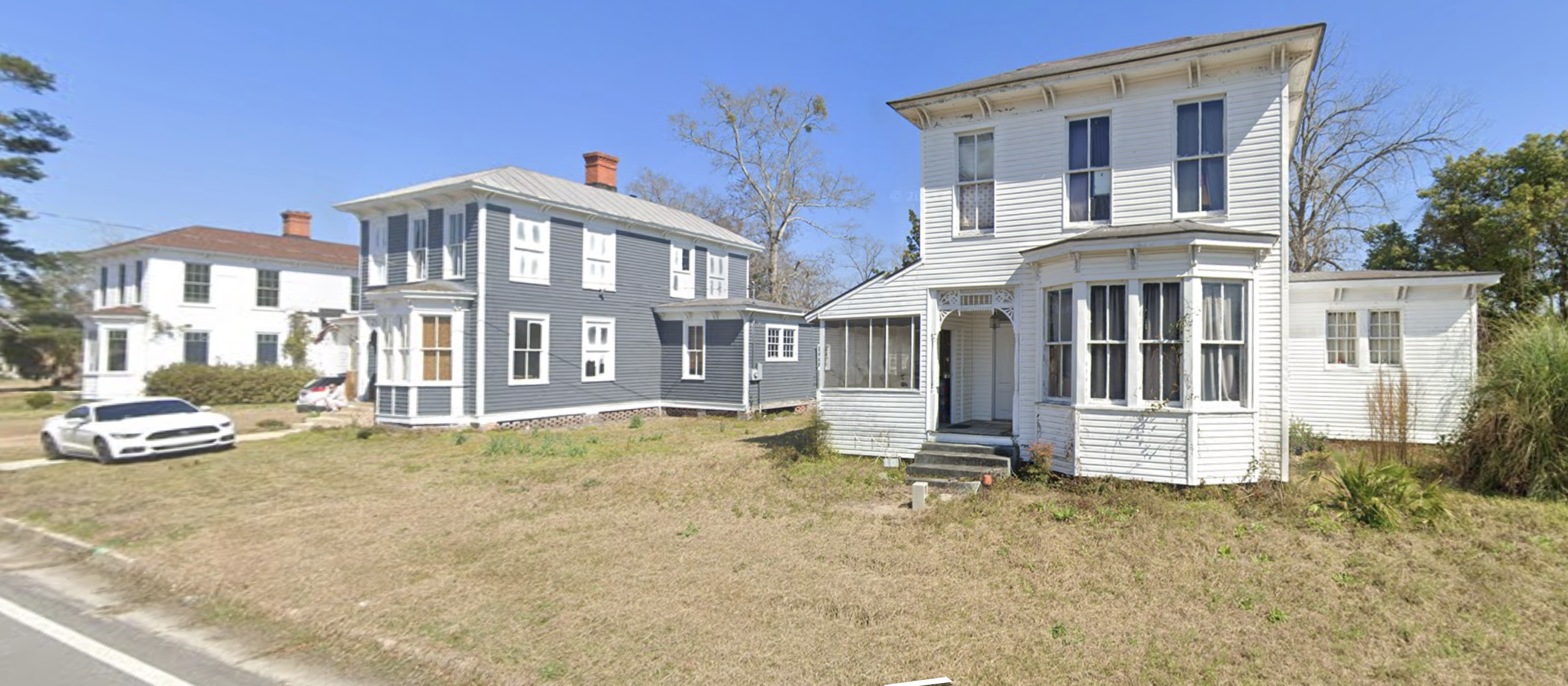
c.1880 Georgia Italianate Fixer Upper. One of the “Three Sisters” is ready for a new owner and ready for a creative touch. This home has some beautiful architecture.

Realtor Comments
The Three sisters! Side by side these beauties sit. The corner lot, 10 N Church st is for sale. It is in process of being renovated. You can pick up where the owner left off. Plumbed for 1 bath upstairs, 2 baths downstairs. 1 bed down and 2 beds upstairs. Kitchen in process of remodel. No plumbing or electric. The exterior is white vinal and home has new roof & dual head mini split for heat and air. Large bay window in front living room. 4 coal burning fireplaces for looks only.
- bed
- bath
- Build date 1880

If interested in a property, pleases contact the realtor whose link is provided in the post below, or contact an agent of your own choosing. Independent verification of details and status is recommended.
10 N Church St, Lumber City, GA 31549 $59,900
- Contact Realtor: Susan Mann Evans
- Google Map
- Niche


History
The “Three Sisters” houses in Lumber City are a row of three rare Italianate-style townhouses on Church Street that are among the most distinctive historic residences in the town.
Origins
The houses were likely built in the late 19th century, probably by a local builder named Matt Cook. Architectural historians have noted that all three share nearly identical designs, suggesting they were constructed as a coordinated group rather than as separate projects.
They were owned by riverboat captain and businessman John Day, one of Lumber City’s most prominent citizens. Day used the buildings as rental properties and owned them at the time of his death in 1906. The houses stand behind and across from other historic landmarks associated with him, including his residence and the Methodist church.

Why They Are Important
The buildings are often called the “Three Sisters” or “Triplets” because of their matching appearance. Their significance comes from their architectural style:
- They are examples of the Italianate style, characterized by tall proportions, decorative brackets, and elegant window arrangements.
- Italianate architecture is relatively uncommon in rural south Georgia.
- Finding three nearly identical Italianate townhouses standing side-by-side is exceptionally unusual for the region.
Changes Over Time
Over more than a century, the houses have experienced varying levels of alteration:
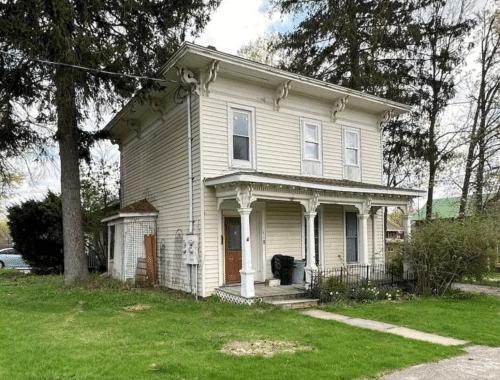
- One has remained largely unchanged and retains much of its historic appearance.
- Another was remodeled with vinyl siding and a screened porch.
- The third has undergone additional modifications but still preserves much of its original form.
- Researchers believe all three originally had tin roofs.
Connection to Lumber City’s History
The houses reflect the prosperity Lumber City enjoyed during the river-transport and timber era. Located near the confluence of the Ocmulgee and Oconee Rivers, Lumber City became an important center for lumber rafting, river commerce, and steamboat traffic in the late 1800s. Wealth generated from those industries enabled local businessmen such as Captain Day to build and invest in substantial properties.
Current Status
The Three Sisters remain among the best-known historic residences in Lumber City and are frequently photographed by preservationists and architectural historians. They are considered some of the town’s most notable surviving examples of 19th-century architecture and are a visual reminder of Lumber City’s river-trade heyday.
An interesting recent note: one of the houses, at 10 North Church Street, was listed for sale in 2025–2026 and was described in real-estate listings as part of “The Three Sisters,” confirming that the nickname is still widely used locally.